A consumer drone is cheap, easy to fly and can cross a fence in seconds. For an industrial, energy or government site, that is a new risk: imaging, reconnaissance, disruption or dropping an object. This guide explains how an anti-drone system works, which technologies it uses and what to prepare before a project in Tunisia.
Why drones have become a risk
Fences, walls and access control protect the ground. A drone flies over them. It can film installations, map patrols and blind spots, disrupt sensitive activity or carry a small object. The risk is not always malicious: a hobby pilot may fly over a site without knowing the rules. Either way, the operator needs to know quickly.
What is an anti-drone system?
An anti-drone system, or C-UAS (Counter Unmanned Aircraft System), combines sensors and software to watch the low airspace around a site. It extends perimeter security upward: fence sensors watch the ground, anti-drone watches the sky. Waycon has designed and integrated security architectures in Tunisia since 2004.
The chain: detect, track, identify, respond
- Detect: spot a drone in the monitored zone.
- Track: follow its position and trajectory continuously.
- Identify: confirm it is a drone, not a bird, and where possible locate the pilot.
- Respond: alert, apply the planned procedure and, if needed, notify the authorities.
Detection sensors
Radio-frequency (RF) detection
Most drones talk to their remote by radio. An RF sensor listens for those signals, reports a drone and, depending on the model, helps locate both drone and pilot. It cannot detect a drone flying without a radio link.
Radar
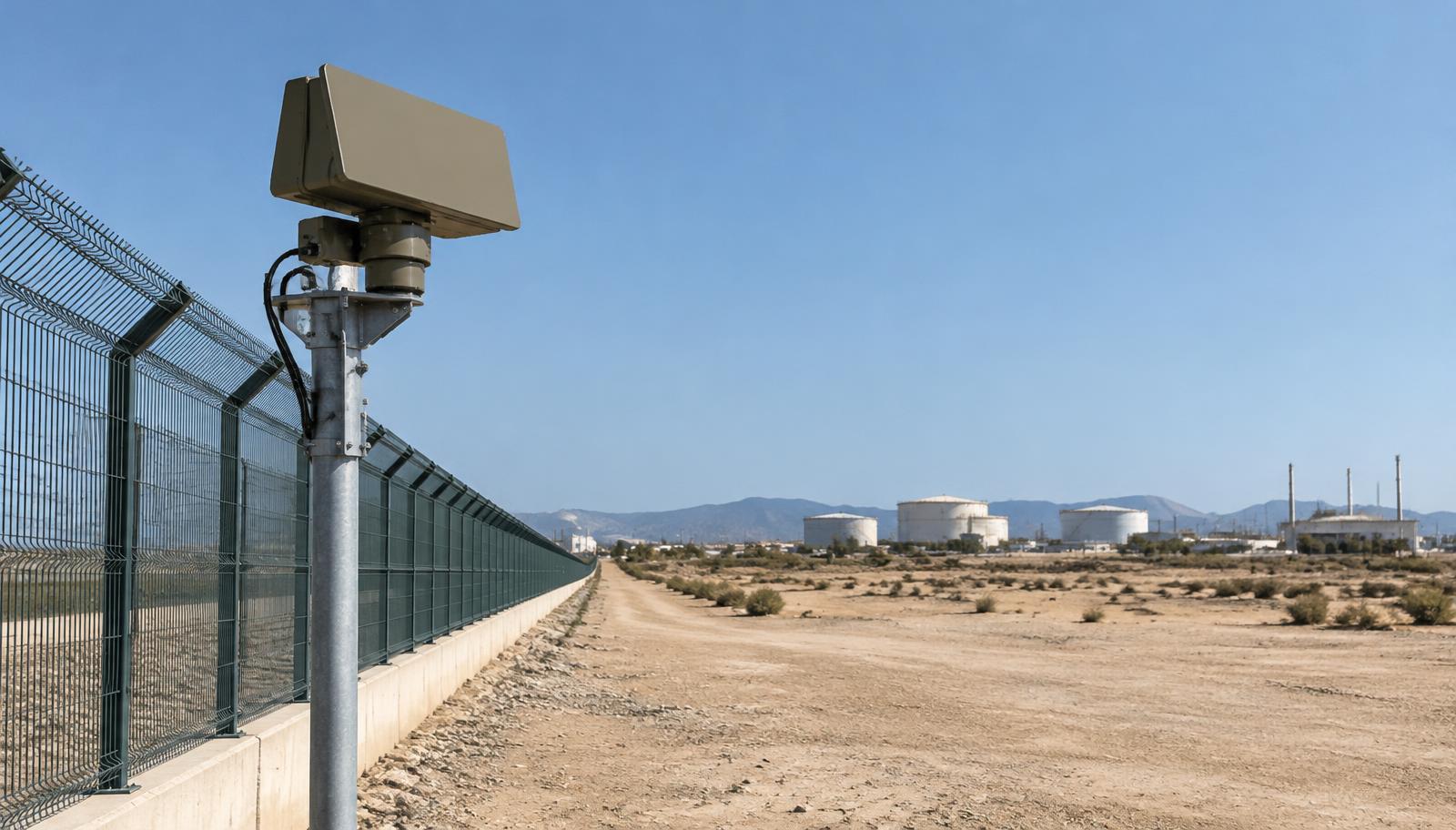
Radar spots moving objects in the airspace, day and night, including a drone that is radio-silent. Small drones have a weak signature, so the radar must suit this type of target and be paired with visual verification.
Optical and thermal cameras
Steered automatically by radar or RF, PTZ cameras visually confirm the target. Thermal takes over at night. Video analytics help tell a drone from a bird. See our AI video surveillance guide.
Acoustic sensors
They recognise the sound signature of motors. Useful as a short-range complement, they are sensitive to ambient noise.
Mitigation and the legal framework
Jamming, spoofing or intercepting a drone affects radio communications and air safety. These measures are regulated and fall to the competent authorities. For most sites, the project therefore covers detection, alerting, evidence (video, trajectory, timestamps) and a response procedure agreed with the authorities. The applicable framework is validated project by project with the client.
Supervision and response procedure
A drone alert is only useful if the operator knows what to do. In supervision, they see the drone's position, trajectory, verification image and instructions: shelter, pause an activity, alert teams, report. Alerts correlate with video, the perimeter and access control. See our supervision and hypervision page.
Which sites to protect?
- Energy: oil and gas sites, substations, solar farms.
- Industry: plants, storage areas, sites with confidential know-how.
- Institutions and sovereignty: government buildings, prisons, embassies.
- Transport and events: ports, airports, large gatherings.
See also our sovereignty sector page.
Selection criteria
- the size and shape of the site;
- terrain, buildings and obstacles blocking line of sight;
- the radio environment and nearby air traffic;
- birds and ambient noise;
- the threat level and expected reaction time;
- integration with existing supervision;
- the legal framework for response measures.
Mistakes to avoid
- buying a single sensor and expecting it to cover every threat;
- planning mitigation without an approved legal framework;
- installing detection without a response procedure;
- ignoring false alarms caused by birds;
- leaving anti-drone isolated from the rest of security.
Checklist before requesting a quote
- the site plan and priority zones;
- any overflights or incidents already observed;
- existing equipment (cameras, radar, supervision);
- how monitoring is organised and who must be alerted;
- known regulatory constraints for the site.
Gather these and contact us. For the full picture, read our electronic security integrator guide.