Access control decides who gets in, where, when and with which credential. In Tunisia as elsewhere, it matters for a head office as much as for a factory, a warehouse, a public site or a car park. This guide covers the components of a complete project and the questions to ask before requesting a quote.
What is an access control system?
An access control system combines four elements: a credential (badge, mobile, fingerprint, face, plate), a reader, a physical barrier (door, turnstile, barrier) and software that manages rights and logs events. The software sets who can pass, through which door and at what times, and keeps the history of every passage. Waycon has designed and integrated these systems in Tunisia since 2004, with teams in Ariana and Sousse. For the full offering, see our access control page.
Badges, mobile, biometrics: choosing identification
Badges and mobile credentials
Badges remain the most common credential for everyday access: they are easy to issue and revoke. Smartphone credentials remove the need for physical badges and make temporary rights easier to grant. The choice depends on the number of users, staff turnover and the expected security level. Explore identification technologies.
Biometrics
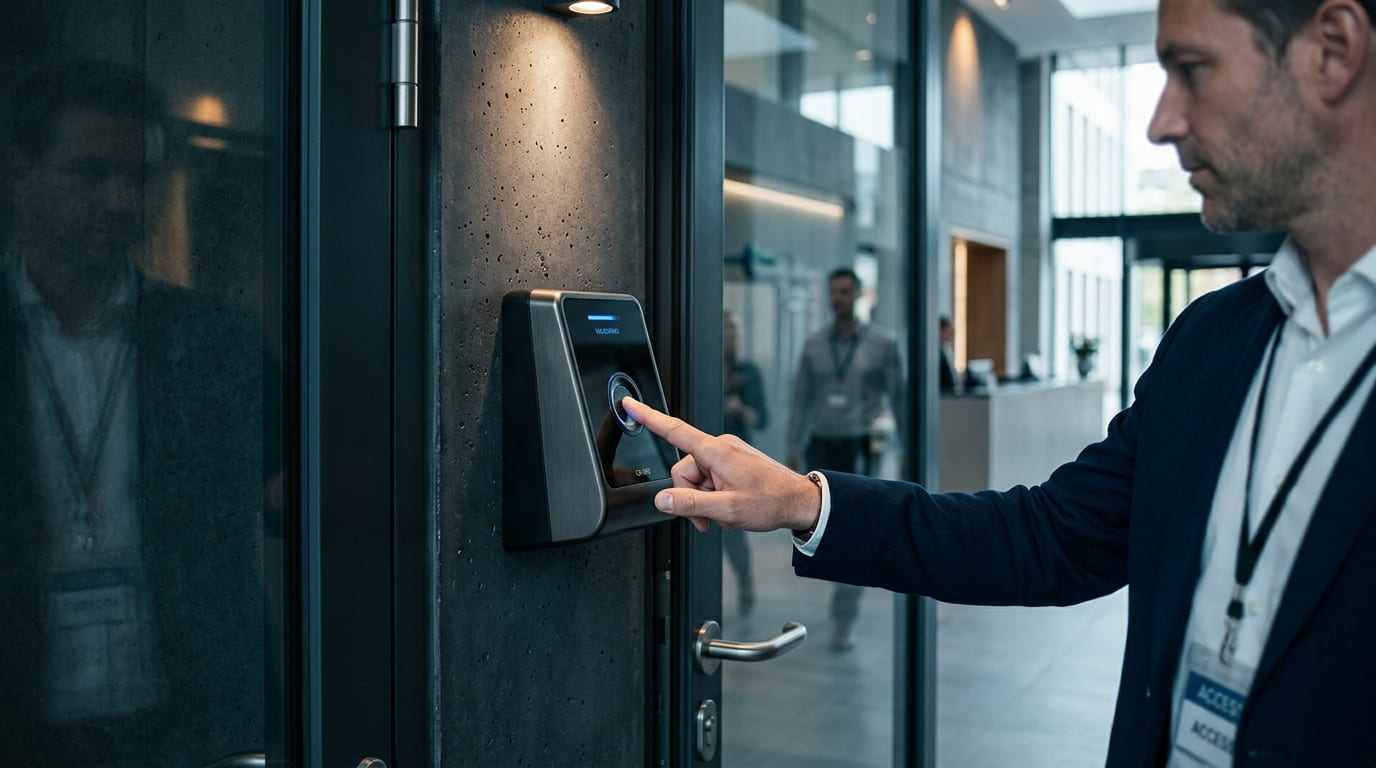
Fingerprint and facial recognition verify the person rather than the credential, which reduces the risk of badge lending. They suit sensitive areas: technical rooms, data centers, critical production zones. Biometric terminals from Suprema, a Waycon partner, are one example; read our article on the BioStation 3 Max terminal. Using biometrics means agreeing data retention rules with the client beforehand.
Doors, turnstiles, speed gates and barriers
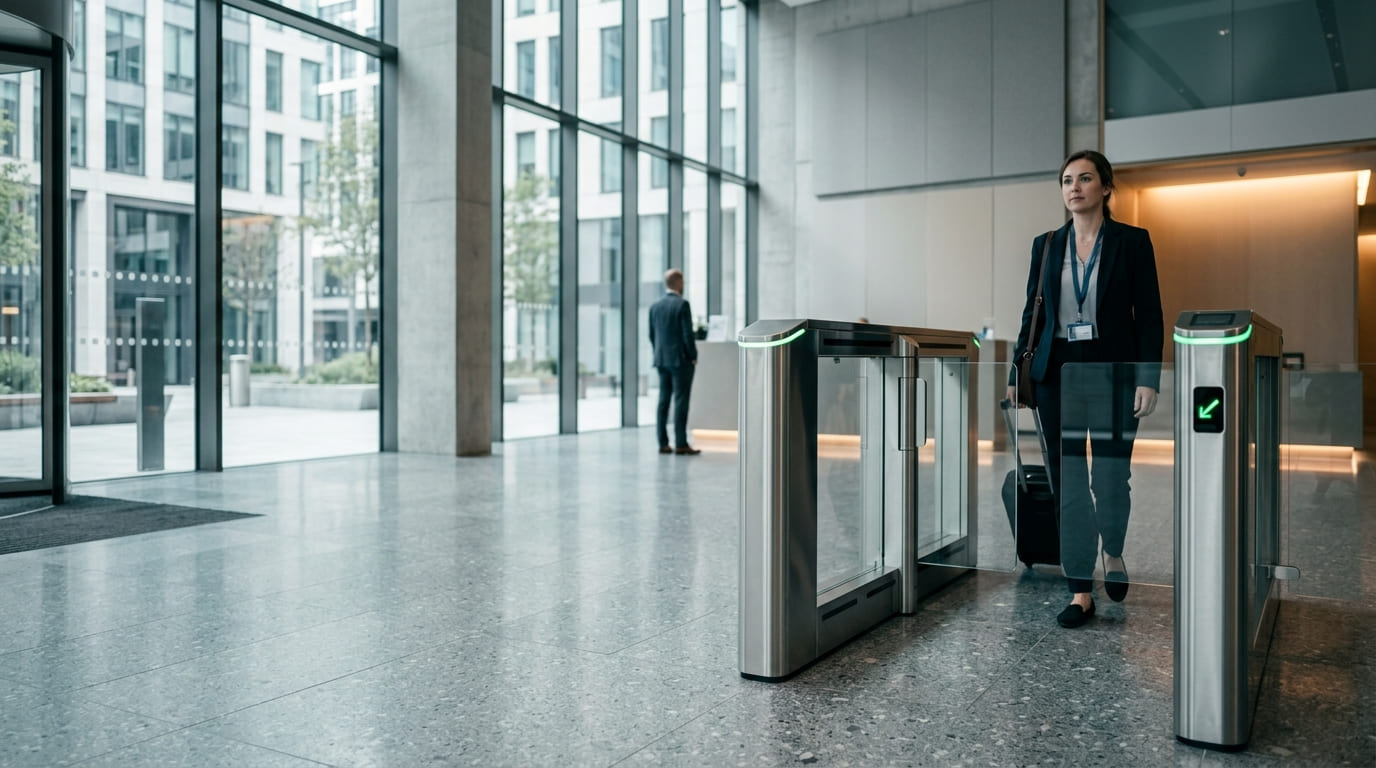
How restrictive a passage is should match the need. A door with a reader is enough for an office. A turnstile or speed gate is needed to count entries and stop a second person following the first. In busy lobbies, speed gates keep throughput high. Automatic Systems, a Waycon partner, makes this kind of equipment; see our article on SlimLane EVO, AS1 barriers and the RevLock door. To compare equipment families: entrance control equipment.
Vehicle access and plate recognition
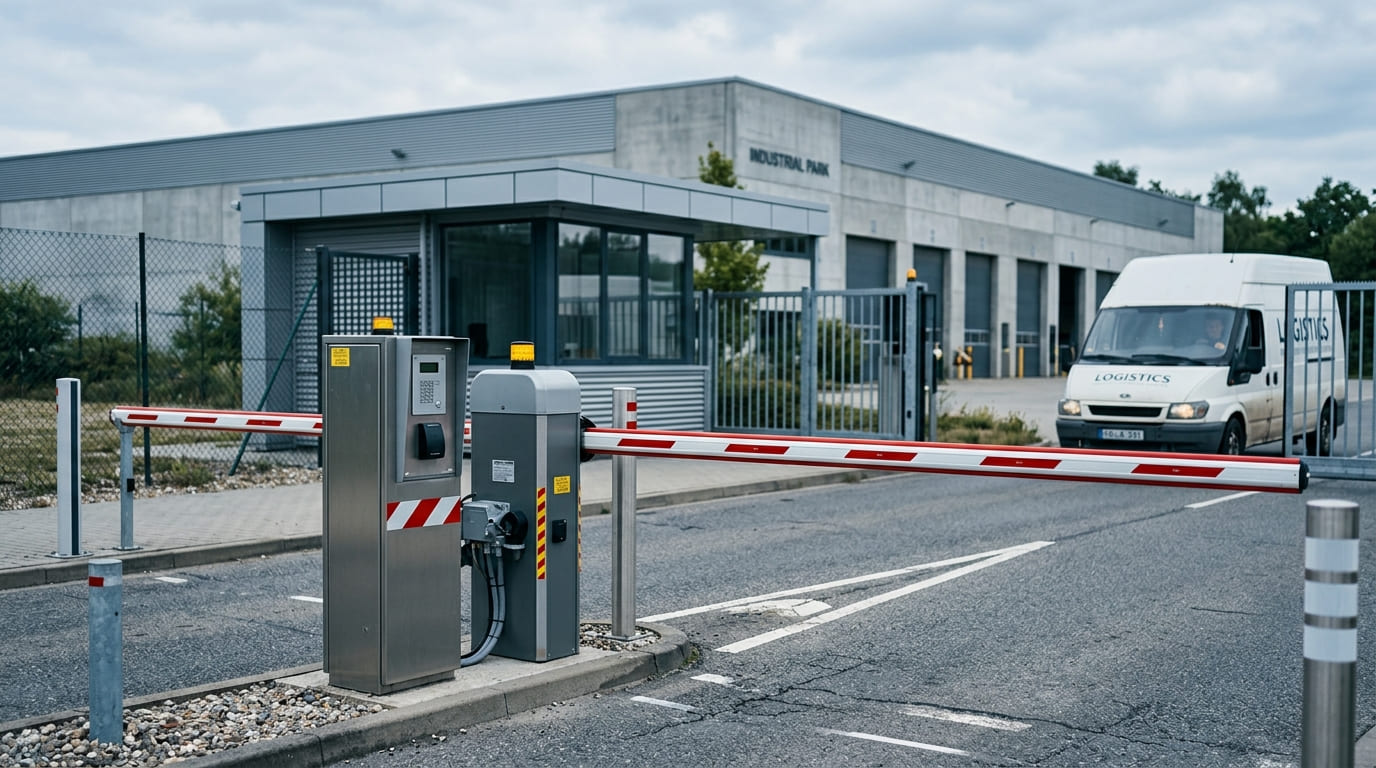
For vehicles, a barrier is combined with a loop or radar detector and an identification method: long-range badge, remote control or automatic number plate recognition (ANPR). ANPR means drivers don't have to present anything and keeps an image of every passage. It is useful for company car parks, industrial sites, depots and logistics areas. See our guide to ANPR in Tunisia.
Managing visitors and contractors
A site receives visitors, delivery drivers and contractors who don't need a permanent badge. A visitor management module lets you pre-register them, grant time-limited access and keep a record of their visit. It replaces paper logbooks and shows clearly who is on site during an evacuation. See also our visitor access management solution.
Integration with video surveillance and supervision
Linking access control to video surveillance lets operators pull up the image of a passage in one click, check a forced or propped-open door, and handle the alarm from a single screen. Supervision centralizes these events for security teams. Hikvision, a Waycon partner, offers an approach that brings pedestrians and vehicles together; read the Quick Pass article. For the full picture of a security project, see our guide to electronic security integration in Tunisia.
Mistakes to avoid
- choosing readers before mapping flows and areas;
- using a single identification technology for every security level;
- forgetting exits, evacuation and emergency handling;
- not planning for visitors and contractors;
- neglecting maintenance, software backups and rights revocation;
- mixing brands without checking compatibility.
Checklist before requesting a quote
- the site plan, the areas to protect and how sensitive they are;
- the number of doors, pedestrian passages and vehicle lanes;
- the number of users, visitors and contractors per day;
- the preferred credential for each area;
- whether this is a complete new installation or an extension of an existing system;
- operating constraints (hours, evacuation, accessibility);
- the need for integration with video surveillance and supervision.
Gather these points, then contact us: a first conversation frames the project before any proposal.