At a site gate, a car park entrance or a logistics yard, the question is the same: how do you let authorized vehicles in without slowing traffic or tying up a guard? Automatic number plate recognition, or ANPR, answers that need. This guide explains how it works and what to plan for a project in Tunisia.
What is ANPR?
ANPR is a technology that reads a vehicle's plate from a video image and turns the characters into usable data. That data is checked against a list of authorized vehicles to raise a barrier, open a gate or trigger an alert. Waycon has integrated these systems in Tunisia since 2004, with teams in Ariana and Sousse, combining them with access control and video surveillance.
How plate recognition works
From camera to decision
A dedicated camera captures the approaching vehicle. Analysis software locates the plate, reads the characters, then checks the list of authorized plates. If the plate is recognized, the system raises the barrier; if not, it can refuse entry or alert an operator. Each passage is logged with the plate read, the time and the matching image. Processing can run in the camera or on a server, depending on the chosen architecture.
Whitelist, blacklist and visitors
The whitelist holds authorized vehicles. A blacklist flags those to refuse or watch. For visitors, a plate can be registered in advance for a limited time. See also our general guide to access control in Tunisia.
Where to use it: car parks, industrial sites, logistics
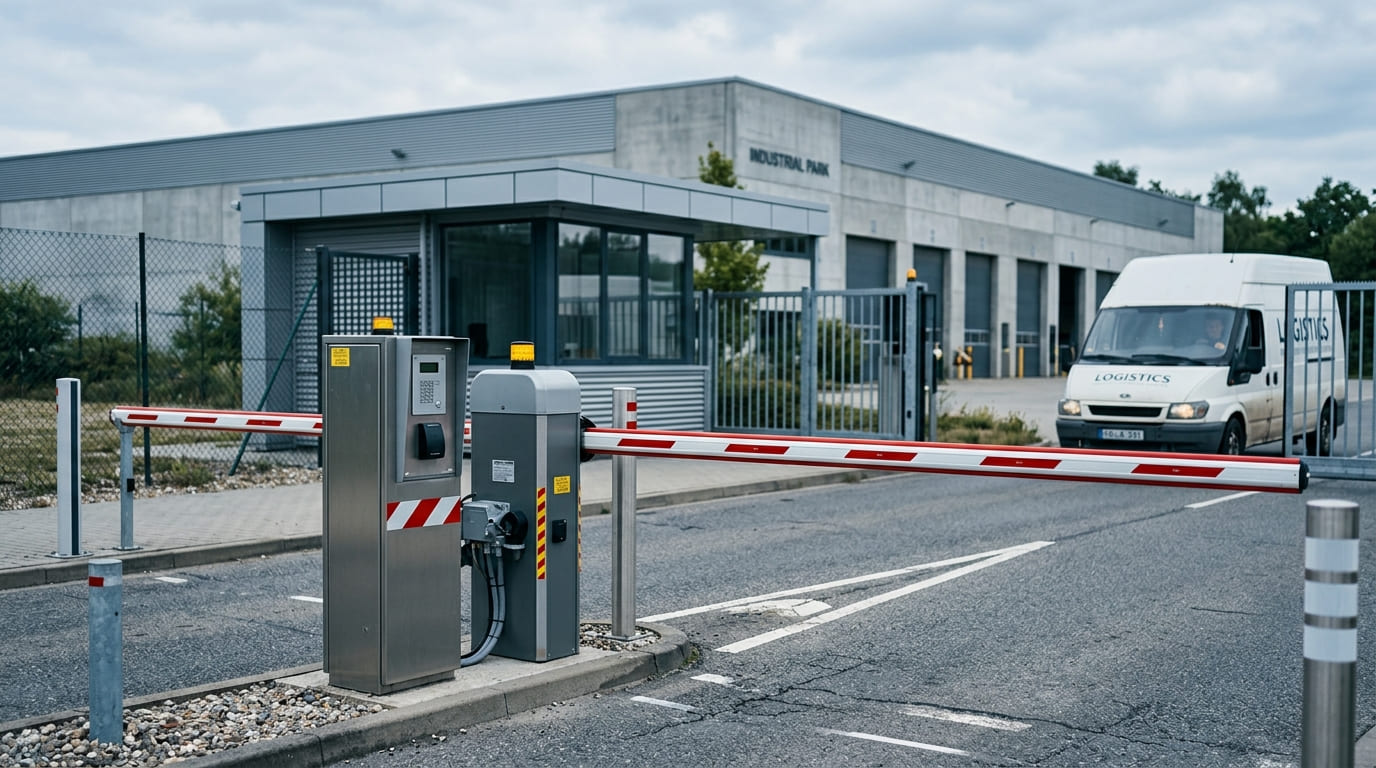
ANPR is used in company and residential car parks, at industrial site entrances, in depots and logistics areas, and on public or institutional sites that need to track incoming vehicles. It is especially useful when traffic is frequent and drivers shouldn't have to get out or show a badge. For parking spaces and traffic flow, see our traffic and parking management solution.
Installing it right: camera, lighting, speed
Read quality depends on the installation. The camera needs a suitable angle to the plate, no backlighting or glare, enough light at night, and settings that account for approach speed. A lane where vehicles slow down or stop at the barrier usually gives better results than a fast lane. Local conditions (dust, rain, low sun) are considered during the site survey and checked in commissioning tests.
Linking with barriers and access control
The plate recognition system connects to the barrier, the gate and the access control software, so vehicle rights are managed alongside personnel rights. It can also be linked to video surveillance to retrieve the image of any passage. Entrance equipment is shown on our entrance control equipment page. For pedestrians and vehicles at the same entry point, see the Hikvision Quick Pass article.
Data and compliance: points to settle
A registration plate and a vehicle image can be personal data. Before deployment, the client needs to define the purpose of processing, who can access the data, how long it is kept and how it is protected. These points are the site operator's responsibility and should be validated with the relevant people on their side; Waycon designs the technical architecture to support those choices (retention period, access rights, logging).
Mistakes to avoid
- installing the camera without testing the lane's real angle, lighting and speed;
- deploying ANPR without a fallback when a plate isn't read (intercom, badge, guard);
- forgetting to register visitors and contractor vehicles;
- not defining how long images and plates are kept;
- keeping plate recognition separate from the rest of access control.
Checklist before requesting a quote
- the number of entry and exit lanes to equip;
- vehicle speed and type (cars, trucks, two-wheelers);
- lighting and lane conditions (day, night, backlight);
- the number of authorized vehicles and visitors;
- whether this is a complete new installation or an extension of existing barriers and access control;
- the desired retention period for images and plates;
- the need for integration with video surveillance and supervision.
Gather these points, then contact us: a first conversation frames the project before any proposal. For an overview of a security project, see our guide to electronic security integration in Tunisia.