In a warehouse or plant, a large share of time goes into moving loads from one point to another. Mobile robots automate these repetitive trips, and can also handle patrols and inspections. This guide explains the difference between AGVs and AMRs, possible uses and what to prepare before a project in Tunisia.
AGVs and AMRs: what are they?
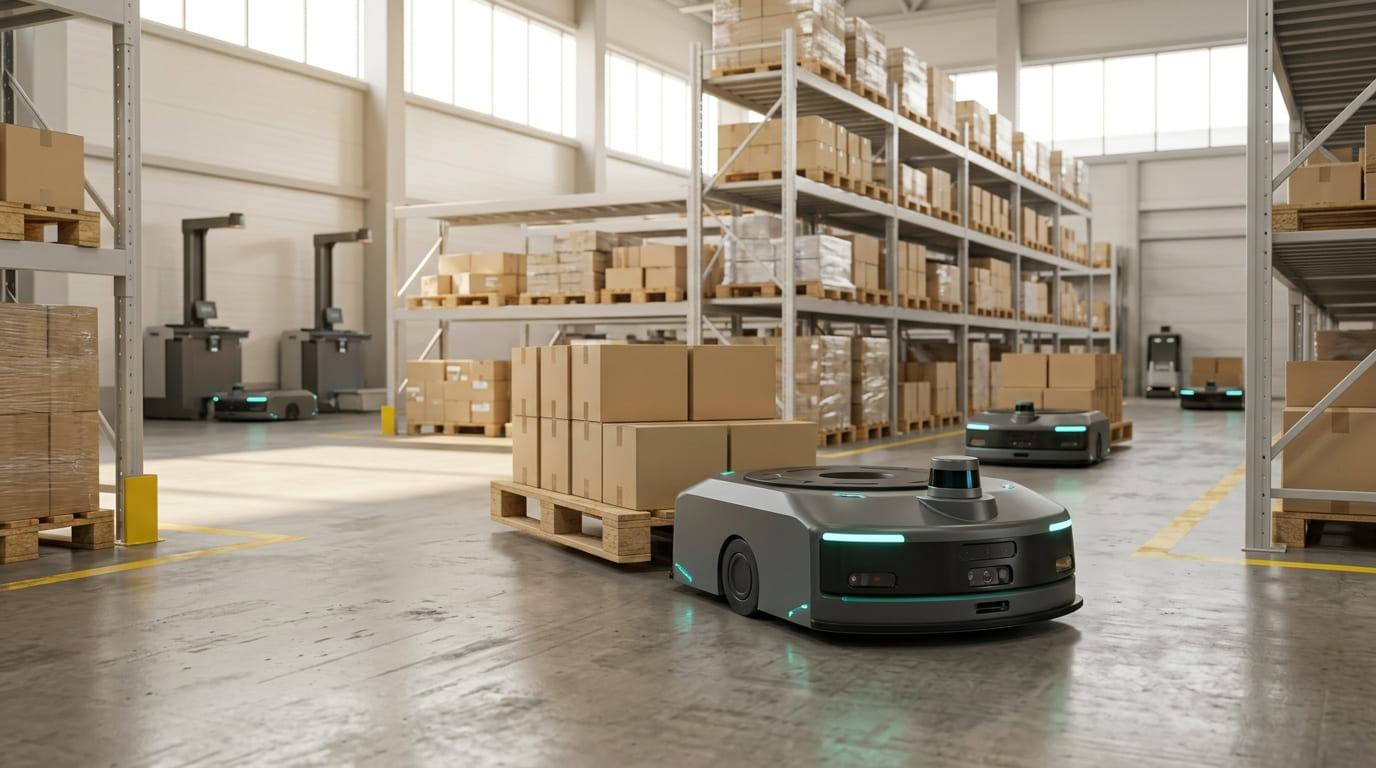
AGVs (automated guided vehicles) and AMRs (autonomous mobile robots) handle load transport, security patrols and scheduled inspection in warehouses and plants. Fitted with navigation sensors and cameras, they move among staff and report data continuously. Waycon sizes the fleet, maps the routes and integrates robots with your systems. See our robotics and drones page.
AGV or AMR: the differences
AGV: the fixed path
An AGV follows a predefined route (markings, wire, markers). It is predictable and suits stable, repetitive flows. Faced with an obstacle, it stops and waits.
AMR: autonomous navigation
An AMR maps the site with its sensors, plans its route and goes around obstacles. It adapts more easily to layout changes and shared environments.
The right choice depends on how stable the flows are, the space available and how much the robots share space with people and forklifts.
Business uses
- Load transport: between docks, production lines and storage.
- Robotic patrols: programmed routes with cameras and anomaly detection.
- Scheduled inspection: regular readings in technical areas.
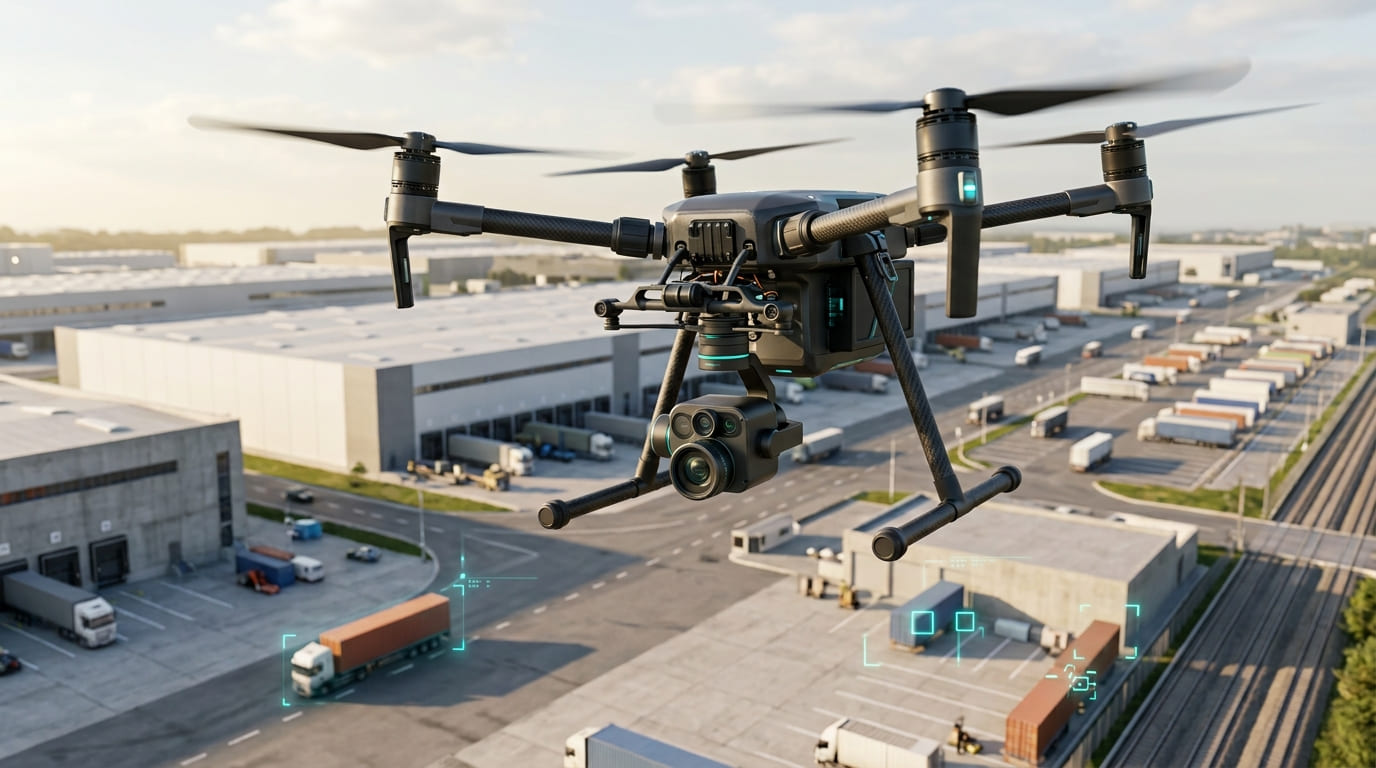
- Aerial complement: on large sites, drones cover the outdoors; read our article on drone site inspection.
Safety and working alongside staff
Robots carry sensors that slow or stop them in front of a person or obstacle. The study defines shared zones, speeds, forklift crossings and signage. Staff training is part of the project.
WMS integration and supervision
The fleet receives missions from the WMS or production system. Missions, status, batteries and alerts feed Waycon supervision alongside video and access control: a robot can, for example, pass through an authorised automatic door. See our supervision and hypervision page.
Project stages
- study of flows, loads and the building;
- AGV or AMR choice and fleet sizing;
- mapping routes and charging areas;
- integration with existing software;
- phased commissioning, testing and training;
- maintenance and performance tracking.
Which sectors?
Logistics, industry, retail, healthcare and data centres. See our industry sector page.
Selection criteria
- load type, weight and volume;
- distances and trip frequency;
- floor condition, slopes, doors and lifts;
- density of people and forklifts;
- Wi-Fi coverage;
- the software to connect.
Mistakes to avoid
- automating a poorly organised flow instead of fixing it first;
- underestimating floor condition and network coverage;
- forgetting charging areas and charging time;
- neglecting staff training and buy-in;
- leaving the fleet isolated from other systems.
Checklist before requesting a quote
- the building plan and routes to automate;
- loads to move and daily volumes;
- schedules and zones shared with staff;
- software in place (WMS, production, supervision);
- goals: time savings, safety, traceability.
Gather these and contact us. For the full picture, read our integrator guide.